
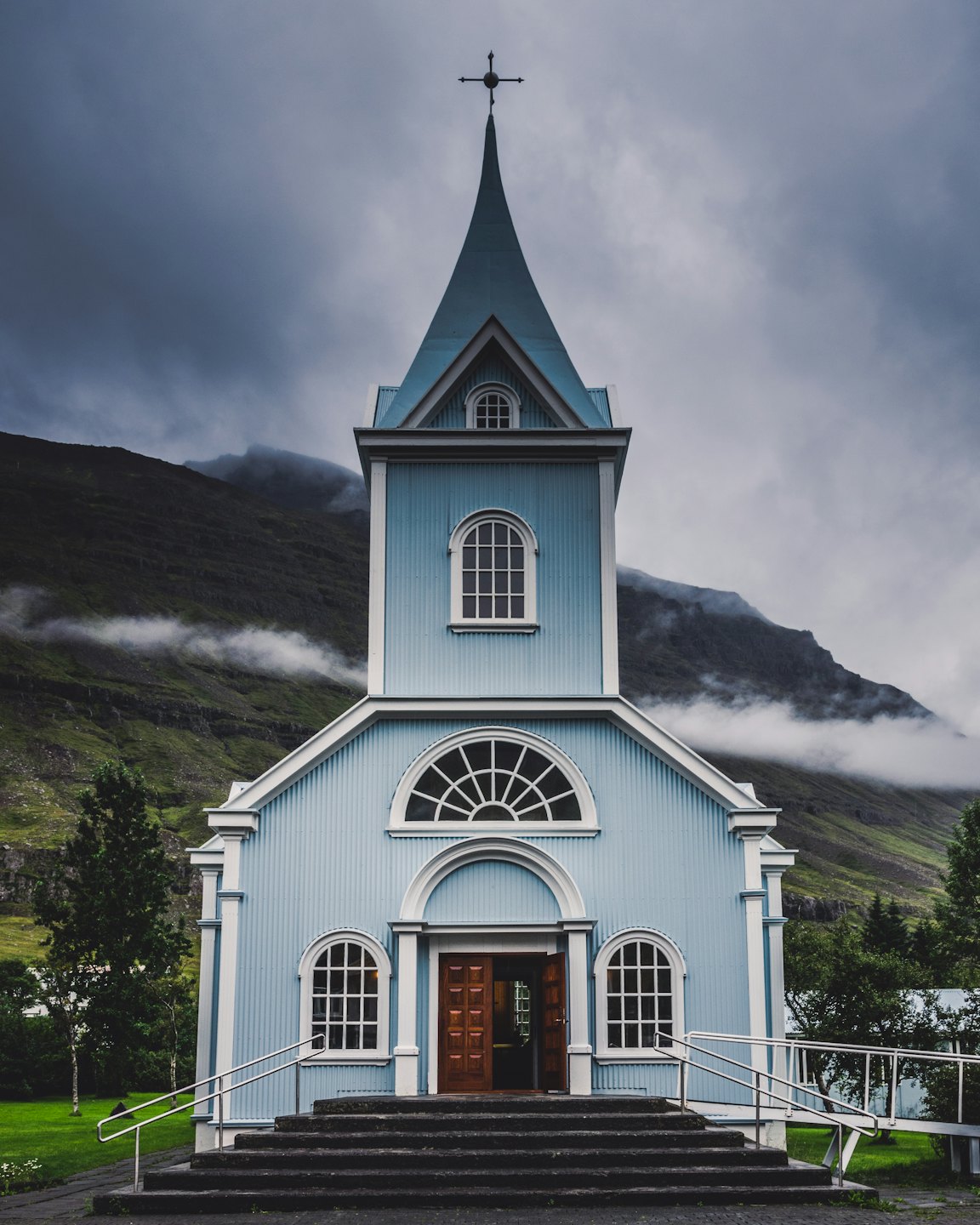
Welcome to Church «LUZ DE VIDA»
At Church «LUZ DE VIDA», our mission is to share the light of faith and hope, fostering a loving community guided by spiritual growth and service.

Church Bylaws
“For God is not a God of disorder but of peace.”
1 Corinthians 14:33
1. Name and Doctrines of the Church
1.1
The local church of Evangelical Christians-Baptists is named «Light of Life» Evangelical Baptist Church, Torrevieja (Spain).
1.2
Light of Life Church is a Baptist church and adheres to classical Baptist doctrine. The doctrinal foundation of the Church is the Bible in its literal, historical-grammatical interpretation, as well as the doctrinal confession of Evangelical Christians-Baptists edited by F. P. Pavlov (1906) and I. V. Odintsov (1928).
1.3
In addition, Light of Life Church shares general Baptist principles that express the fundamental elements of Baptist faith:
1.3.1 The Holy Scripture is the only rule and authority in all matters of faith and life;
1.3.2 Religious freedom for all;
1.3.3 The Church of God consists exclusively of regenerated (born-again) people;
1.3.4 Baptism and the Lord’s Supper belong exclusively to believers;
1.3.5 The autonomy and independence of each local church;
1.3.6 The priesthood of all believers;
1.3.7 Separation of church and state.
1.4
In matters of marriage and sexuality, Light of Life Church adheres to the traditional biblical view as expressed in the document “Position of Light of Life Church on Marriage, Divorce, Remarriage, and Sexuality.”
1.5
The text of the doctrinal statement and the document “Position of Light of Life Church on Marriage, Divorce, Remarriage, and Sexuality” are attached to these bylaws.
2. Purposes of Light of Life Church
Light of Life Church is established to pursue the following purposes:
2.1
To confess and glorify the Triune God-Father, Son, and Holy Spirit-the Creator of heaven and earth, the Maker and Ruler of all mankind, who saved humanity from eternal destruction through the sacrificial death of Jesus Christ on the cross;
2.2
To proclaim the good news of the Gospel of Christ and to spread the influence of biblical truth through the power of the Holy Spirit among people both near and far. To accomplish this task, Light of Life Church actively participates in leading sinners to Christ and in planting new churches, primarily among Slavic peoples, as well as among other nationalities and cultures;
2.3
To nurture church members in the spirit of biblical truth through corporate worship services, small group ministries, and other forms of ministry that promote spiritual growth and equip believers for service to God and people. Special attention is given to the upbringing of the younger generation of Slavic believers. For this purpose, conditions are created that enable firm adherence to biblical truth in a changing cultural environment;
2.4
To spread the influence of the Word of God, which is able to make the life of every believer complete and blessed. To this end, the Church organizes the study, distribution, and promotion of the Bible in forms understandable to contemporary people. This may include Bible study groups, Sunday schools for children and adults, Christian camps, theological education, specialized study groups, and other activities that help people better understand the importance of the Bible and apply its truths in everyday life;
2.5
To provide church members with opportunities for fellowship, mutual support, mutual edification, and service to one another.
3. Church Membership
3.1
Membership in Light of Life Church is a privilege, not a right.
3.2
A person may become a member of Light of Life Church if they meet the following requirements:
3.2.1 They are a child of God, born again through personal faith in Jesus Christ as Lord and Savior, having testified to this through water baptism and consistent evidence of Christian life;
3.2.2 They affirm the authority, divine inspiration, inerrancy, and sufficiency of the Holy Scripture-the Bible-and are willing to submit to it;
3.2.3 They agree with the doctrinal teaching (Section 1.2) professed by Light of Life Church;
3.2.4 They accept these bylaws, which express the structure and philosophy of ministry of this church, and agree to submit to all its provisions;
3.2.5 They are willing to actively participate in the life of the church, support its ministry by contributing their time, effort, abilities, and finances.
3.3
To become a member of Light of Life Church, the applicant agrees to:
3.3.1 Begin attending worship services, Bible study groups, and prayer meetings in order to become more familiar with the church’s ministry practices and life, engage in personal fellowship with brothers and sisters, and participate in mutual support and service;
3.3.2 Become acquainted with the general structure of the church, its doctrines, and bylaws. For this purpose, special classes may be held as needed;
3.3.3 Complete the designated application form and submit it to a member of the Elders’ Council;
3.3.4 Confirm in writing their agreement with the church’s doctrines, bylaws, and ministry structure;
3.3.5 Undergo a personal interview with representatives of the Elders’ Council.
3.4
The decision to accept new members is made by the Elders’ Council.
3.5
After approval by the Elders’ Council, new members are presented to the general church assembly for introduction.
3.6
Members of other churches may be accepted into Light of Life Church on the basis of a good testimony from the leadership of their former church, subject to the requirements set forth in Sections 3.2 and 3.3 of these bylaws.
4. Privileges and Responsibilities of Church Members
4.1
In response to God’s great love expressed in the sacrifice of Jesus Christ, each church member should recognize the necessity of regularly engaging in prayer and the study of Holy Scripture, thereby gaining understanding of God’s will and receiving strength to carry it out in daily life.
4.2
Each church member should strive to participate in one of the church’s small groups for personal edification, service to other believers, and outreach to unbelievers.
4.3
Each church member is obligated to care for and pray for the church. Slander, judgment, gossip, abusive speech, rebellion among church members, and disobedience to the Elders’ Council (according to the Bible) are sins against the church and are incompatible with membership in the local church.
4.4
Each church member, according to their spiritual gifts, should seek to participate in church ministry through various forms of mutual service that contribute to achieving common goals.
4.5
A primary responsibility of believing parents is to raise their children according to biblical teaching (Deut. 6:6-9; Eph. 6:1-4; Prov. 13:24; 23:13-14), encouraging their conversion and forming Christian character in them.
4.6
All church members may participate in shaping the overall development strategy of the church by submitting proposals and comments to the Elders’ Council and by jointly discussing and deciding matters within the authority of the membership assembly.
4.7
Since financial stewardship is a privilege of worshiping God with one’s finances, each church member should participate in it proportionally to their personal income.
4.7.1 We recognize that financial stewardship aligns with biblical teaching on proper financial management and generosity (2 Cor. 9:7).
4.7.2 Financial stewardship is not a burden but an opportunity to serve God by financially supporting the ministry of His church.
4.8
Church members may withdraw from membership voluntarily by submitting written notice to the Elders’ Council. Members under church discipline may not withdraw until their disciplinary process is resolved (Section 5).
5. Church Discipline
5.1
Matters of church discipline are handled by the Elders’ Council.
5.2
Members of Light of Life Church who hold doctrinal errors or whose behavior violates Holy Scripture or the church’s stated positions (Sections 1.2, 1.3, 1.4) may be subject to church discipline in accordance with biblical teaching (Matt. 18:15–17).
5.3
Church discipline may take the form of private admonition, admonition with witnesses, admonition before the church, or excommunication.
5.4
The purpose of church discipline is sincere repentance, restoration to proper conduct, reconciliation with the Heavenly Father and others, and protection of believers from temptation and sin.
5.5
If the offending person repents and desires correction, the Elders’ Council may appoint counselors to provide practical assistance, suspending disciplinary measures during counseling.
5.6
If repentance is professed but not evidenced by fruit, discipline should intensify until its goals are achieved.
5.7
If the offending person refuses repentance, the Elders’ Council shall decide on excommunication, resulting in removal from membership, loss of pastoral care, ministry participation, and the Lord’s Supper.
5.8
Members under discipline may be suspended from ministry. Those under formal reprimand may not serve, participate in Communion, or vote in membership meetings.
5.9
Members who systematically violate these bylaws or who fail to attend services and membership meetings for three months without valid reason may be removed from membership by decision of the Elders’ Council.
5.10
Church discipline may also apply to non-members who regularly attend and identify as Christians but live in evident sin or promote teachings contrary to Scripture or church doctrine.
6. Church Governance
6.1 Church Membership Meeting
6.1.1 Every church member has the right to vote in making decisions on various church matters that fall within the authority of the membership meeting. This right is exercised through participation in discussions of church matters and voting at membership meetings. Such matters include:
6.1.1.1 Review of the church budget;
6.1.1.2 Making decisions regarding church-owned real estate, including acquisition, construction, sale, exchange, etc.;
6.1.1.3 Other matters requiring significant financial expenditures or resulting in major changes in the life and ministry of the church.
6.1.1.4 Routine operational matters of the church do not fall within the authority of the membership meeting and are resolved by the Board of Elders, with subsequent notification of church members as necessary.
6.1.2 Decisions of the membership meeting are considered legitimate if at least 50% of the total registered church membership participates in the vote.
6.1.3 Decisions of the membership meeting are valid if approved by a simple majority, i.e., 50% plus one vote of those participating in the vote.
6.1.3.1 Vote counting is carried out by a counting committee appointed by the Board of Elders.
6.1.4 Membership meetings are prepared and conducted by the Lead Pastor or by one of the members of the Board of Elders, as needed.
6.1.5 Any church member who is not under church discipline may initiate discussion of an issue at the Board of Elders or at a membership meeting.
6.1.5.1 To do so, a written proposal must be submitted to any member of the Board of Elders. Submitted proposals must include the following:
• 6.1.5.1.1 A clear statement of the proposal or concern;
• 6.1.5.1.2 Biblical, logical, or practical grounds for adopting the proposal;
• 6.1.5.1.3 An explanation of how the proposal will contribute to the edification of the local church;
• 6.1.5.1.4 A description of the resources required to implement the proposal (finances, time, people);
• 6.1.5.1.5 If the proposal or concern involves other individuals, an indication of whether it has been discussed with them;
• 6.1.5.1.6 The name and contact phone number of the proposal’s author.
6.1.5.2 Each proposal or concern is registered by the secretary of the Board of Elders and reviewed by the Board of Elders at the earliest opportunity.
6.1.5.3 The author of the proposal may be invited to attend the meeting of the Board of Elders at which the proposal is considered.
6.1.5.4 A decision is made on each submitted proposal or concern. The results are communicated first to the author and then, if the Board of Elders deems it necessary, the matter is presented to the membership meeting for discussion.
6.2 Board of Elders
6.2.1 The Board of Elders is the primary governing body of the church and is responsible for strategic matters of the church’s life and ministry. These include:
6.2.1.1 The doctrinal foundation of the church (Section 1.2);
6.2.1.2 The philosophy of ministry of the church;
6.2.1.3 Determining the overall strategy for church development;
6.2.1.4 The overall organizational structure of church ministries;
6.2.1.5 Organization of ministries and ministry councils, including the addition of new departments or the dissolution of existing ones as needed;
6.2.1.6 Selection, training, and approval of church ministers and leaders at various levels;
6.2.1.7 Ensuring pastoral care and accountability for all ministers serving on any ministry council;
6.2.1.8 Providing pastoral oversight of specific areas of ministry;
6.2.1.9 Preparing the agenda for membership meetings and conducting such meetings as necessary;
6.2.1.10 Matters of formal church discipline;
6.2.1.11 Presenting the budget prepared by the finance department to the membership meeting for review and subsequent approval;
6.2.1.12 Oversight of budget implementation and financial discipline, including appointing an audit committee and conducting regular audits of financial records and expenditures;
6.2.1.13 Approval of compensation and benefits for church staff who are members and ministers of the local church;
6.2.1.14 Matters concerning the creation of new paid positions or the reduction of existing ones;
6.2.1.15 Coordination of the overall schedule of events conducted by various church ministries, preparation of the annual ministry plan, and amendments to it as necessary;
6.2.1.16 Resolution of conflicts arising between ministry departments or their leaders;
6.2.1.17 Representation of the church before governmental and administrative authorities;
6.2.1.18 Matters of interchurch cooperation.
6.2.2 Members of the Board of Elders may only be spiritually mature men who meet the qualifications of an elder/pastor/overseer as outlined in 1 Timothy 3:1-7, Titus 1:6-9, and 1 Peter 5:1-3. Leaders of individual church ministries may also be invited to participate in the Board of Elders by agreement of the elder body.
6.2.3 The number of members of the Board of Elders is based on the number of qualified ministers whom God raises up and calls to pastoral ministry, in accordance with 1 Peter 5:1-3; Acts 20:28; and Philippians 1:1. Due to differing roles and responsibilities, not all ministers must be equally gifted, equally educated, financially supported, or engaged in the ministry of the Word (1 Timothy 5:17).
6.2.4 The appointment of additional members to the Board of Elders is carried out as needed at the discretion of the Board of Elders, subject to the following conditions:
6.2.4.1 Candidates are nominated by the current Board of Elders from among ministers who have demonstrated their qualifications and faithfulness in serving on one of the church’s ministry councils;
6.2.4.2 Each candidate is evaluated by the current Board of Elders for compliance with the qualifications outlined in 1 Timothy 3:1-7, Titus 1:6-9, and 1 Peter 5:1-3.
6.2.5 A member of the Board of Elders may be removed from service due to physical inability to participate in the work of the Board, loss of spiritual qualifications, disagreement with the church’s doctrine, inability to serve as an example of spiritual maturity to the church, or for other reasons that make such service impossible.
6.2.5.1 In cases of sin, an accusation against a member of the Board of Elders is accepted only on the testimony of two or more witnesses (1 Timothy 5:17-20).
6.2.5.2 The final decision to remove a member from service on the Board of Elders must be made unanimously by all members of the current Board of Elders, followed by informing the church.
6.2.6 A member of the Board of Elders may temporarily suspend his service on the Board due to personal health, family circumstances, missionary service, spiritual crisis, education, etc. To do so, he must submit such a request to one of the members of the Board of Elders.
6.2.6.1 The suspension of service must be discussed and approved by a decision of the Board of Elders;
6.2.6.2 A minister who has suspended his participation in the Board of Elders does not have voting rights during the approved period;
6.2.6.3 Upon completion of this period, the Board of Elders must reaffirm his compliance with the spiritual qualifications of an elder/pastor/overseer as outlined in 1 Timothy 3:1-7, Titus 1:6-9, and 1 Peter 5:1-3, after which he may resume service on the Board.
6.2.7 The chair of the Board of Elders is the Lead Pastor of the church. His first assistant serves as deputy chair.
6.2.8 The Board of Elders elects a secretary from among its members, whose responsibilities include keeping minutes of all Board meetings. These minutes must record the meeting location, time, list of attendees, agenda, all proposals, and decisions made on each issue discussed. All minutes must be permanently archived.
6.2.9 If a matter under consideration concerns a member of the Board of Elders, he may not participate in the vote.
6.2.10 The Board of Elders may, as needed, involve other church ministers in its work without granting them voting rights.
6.2.11 The Board of Elders is the final arbiter in any disputes arising in the course of the church’s ministry, its departments, or among individual members.
6.3 Lead Pastor
6.3.1 The Lead Pastor must meet the biblical qualifications required of members of the Board of Elders and must also possess gifts in preaching, experience in spiritual leadership, a personal prayer life, and pastoral care for church members.
6.3.2 The primary responsibility of the Lead Pastor is to provide biblical leadership to the church through preaching, pastoral counseling, spiritual preparation of leaders, etc. In all aspects of his ministry, he must be faithful to the Bible in its natural, historical-grammatical interpretation.
6.3.3 The responsibilities of the Lead Pastor include:
6.3.3.1 Devoting the majority of his ministry to the study and proclamation of God’s Word and to prayer, including regular sermons and personal prayerful care for church members;
6.3.3.2 Providing pastoral care to church members personally or through other elders or ministers;
6.3.3.3 Providing overall spiritual leadership to the church and the Board of Elders;
6.3.3.4 Spiritual oversight and training of ministers at various levels;
6.3.3.5 Coordinating the ministries of various church departments;
6.3.3.6 Conducting worship services;
6.3.3.7 The Lead Pastor has the right to participate on an ongoing basis in the work of all councils and groups operating within the church.
6.3.4 In the event of expansion of the church’s ministry, the Board of Elders may elect from among its members one or more assistant pastors responsible for supporting the Lead Pastor’s ministry and overseeing specific ministry departments.
6.3.5 The Lead Pastor and his assistants are accountable in their ministry to the Board of Elders.
6.3.6 The Lead Pastor may be released from service for the following reasons:
6.3.6.1 By personal request, in which case the pastor must notify the Board of Elders three months prior to the effective termination of service;
6.3.6.2 In the event of loss of ministerial qualifications as outlined in 1 Timothy 3:1-7, Titus 1:6-9, and 1 Peter 5:1-3. In such a case, the fact of sin or loss of qualification must be confirmed by a unanimous decision of all members of the current Board of Elders, followed by informing the church.
6.3.7 The pastor may be fully or partially supported by the church. Specific conditions and the amount of financial support are stipulated in a special agreement approved by the Board of Elders.
6.3.8 The selection of a new Lead Pastor is carried out by the Board of Elders. The selected candidate is presented to the church for approval at a specially convened membership meeting. Election requires at least 75% of the votes cast, provided that participation includes no less than 50% of the total registered membership.
6.3.9 In the event of illness or temporary absence of the Lead Pastor, his ministry is carried out by his first assistant or another member of the Board of Elders as designated by the pastor or the Board.
6.4 Ministers (Deacons)
6.4.1 To ensure effective ministry in the church, ministers (deacons) may be appointed as needed. Their primary responsibility is to provide comprehensive assistance to the elders in their ministry of building up the church.
6.4.2 Deacons must meet the qualifications outlined in 1 Timothy 3:8–13 and must also have a good understanding of the church’s doctrine and philosophy of ministry, possess specific ministry gifts, maintain a personal prayer life, and be able to work effectively as part of a team.
6.4.3 Deacons are appointed by the Board of Elders based on the above requirements. A unanimous decision of all members of the Board of Elders is required. After appointment, they are presented to the church for prayer.
6.4.4 A deacon may be released from service due to loss of spiritual qualifications, physical inability to participate in the ministry, or for other reasons. This requires approval by at least 75% of the Board of Elders.
6.4.5 All deacons are accountable in their ministry to the Board of Elders.
6.5 Ministry Councils
6.5.1 To ensure effective ministry in the church, various ministry councils responsible for specific areas of ministry may be established, including:
6.5.1.1 Youth Ministry Council;
6.5.1.2 Children’s Ministry Council;
6.5.1.3 Worship Ministry Council;
6.5.1.4 Missions Ministry Council;
6.5.1.5 Prayer Ministry Council;
6.5.1.6 Deacon Ministry Council;
6.5.1.7 Other councils that contribute to the overall development and edification of the church.
6.5.2 Ministry councils address issues related to their respective areas of ministry.
6.5.3 Members of a ministry council may be spiritually mature members of the local church who understand the church’s doctrine and philosophy of ministry, have experience in the relevant area of ministry, and are able to work collaboratively with other ministers.
6.5.4 Members of each ministry council are appointed by the Board of Elders based on the above requirements from among local church members actively serving in the relevant ministry area. Appointment of each new council member requires a unanimous decision of the Board of Elders.
6.5.5 Members of a ministry council may be removed from the council due to loss of spiritual qualifications, physical inability to participate, or other reasons. This requires a unanimous decision of the Board of Elders.
6.5.6 Each ministry council is directly accountable to the Board of Elders.
6.5.7 The leader of each ministry council may, as needed, involve other local church members who are actively serving in that ministry area but are not yet permanent council members.
6.5.8 A member of the Board of Elders may, by assignment of the Board, participate in the work of any ministry council as necessary.
7. Church Finances and Administration
7.1 The budget of the “Light of Life” Church consists of voluntary donations from church members, worship service attendees, private individuals, and organizations wishing to support the ministry of the “Light of Life” Church. For members of the “Light of Life” Church, financial support of the church’s ministry is an honorable responsibility assumed upon joining the church.
7.2 The annual plan for expenditure of funds (church budget) is approved by the Board of Elders after prior presentation to the church at a membership meeting.
7.3 For preliminary budget preparation and oversight of the church’s financial condition, the Board of Elders appoints a finance department from among its members, whose responsibilities include:
7.3.1 Preliminary preparation of the budget for approval by the Board of Elders;
7.3.2 Ongoing monitoring of the implementation of the church budget and informing the Board of Elders of issues requiring immediate attention;
7.3.3 Review of the financial condition of each ministry department to ensure the most effective use of church funds;
7.3.4 Periodic audits of the church’s financial activities to ensure proper use of funds and accurate financial records. Audits must be conducted at least once a year and may involve independent professional auditors. Audit results are presented to the Board of Elders and then to the membership meeting.
7.4 The audit committee is appointed by the Board of Elders and must consist of at least three individuals with education and experience in the financial field sufficient to evaluate the church’s financial condition.
7.5 Any member of the Board of Elders has the right to review any financial documents of the church if there are reasonable doubts regarding their accuracy or suspicions of financial misconduct.
7.6 The church treasurer is appointed by the Board of Elders and is responsible for maintaining accurate records of all financial income and expenditures.
7.7 The church accountant is appointed by the Board of Elders and is responsible for preparing all necessary documentation related to the church’s financial activities and for the timely and accurate payment of taxes and other required payments in accordance with state laws.
7.8 Special (off-budget) collections may be conducted as needed for specific purposes, such as support of missionary ministry or emergency needs of church members. Such collections may be conducted only by decision of the Board of Elders.
7.9 The church has official status as a non-profit religious organization and enjoys the corresponding tax benefits provided by state law.
7.10 All donations received by the church from individuals or organizations are recorded by name, except for anonymous donations.
7.11 The Board of Elders has the right to refuse any gift or donation if it determines that acceptance would conflict with the overall well-being of the church or the purposes of the church as stated in this bylaws.
7.12 Each donor has the right to receive an official document confirming the amount of their donations, except for anonymous contributions.
7.13 Only persons specifically authorized by a documented decision of the Board of Elders may officially represent the church before governmental, administrative, financial, or other organizations and sign legal or financial documents on behalf of the church. Such authorization must be recorded in the minutes and confirmed by issuance of an official document. This authority may be general or limited to specific situations. Without such authorization, no church leader, member, or representative may act on behalf of the church in matters involving governmental, administrative, or financial obligations. The church bears no responsibility for obligations undertaken on its behalf by unauthorized persons.
8. Resolution of Disputes
8.1 All disputes arising between church members, ministers, or other church employees regarding doctrinal issues, church practice, traditions, church finances, or property shall be resolved exclusively by the Board of Elders. Decisions shall be made after prayerful consideration in a spirit of gentleness and humility, with each member of the Board showing respect for the views of others and regarding one another above himself.
8.2 Decisions made by the Board of Elders on matters within its authority are final and may be reconsidered only by decision of the Board of Elders.
The Position of the “Light of Life” Church on Marriage, Divorce, Remarriage, and Sexuality
The Position of the “Light of Life” Church on Marriage, Divorce, Remarriage, and Sexuality
(Appendix to the Church Constitution)
We teach that marriage was instituted by God as part of His common grace, and that marriage exists for no purpose other than that which God has ordained (Gen. 2:18–24). We teach that marriage bears the consequences and curse of the Fall, yet believers who live according to Scripture and under the guidance of the Holy Spirit may experience the peace, good fruit, and fulfillment God has provided in marriage (Gen. 3:16; 1 Pet. 3:7).
We teach that Christian marriage is to illustrate the love of Christ and His church, where the husband loves his wife as Christ loves the church, and the wife responds to her husband as the church responds to the love and leadership of Christ (Eph. 5:18-33).
We teach that Christian marriage illustrates the relationship between Christ and His church; therefore, believers should marry only those who share their faith and new life in Christ (2 Cor. 6:14).
We teach that the term “marriage” has only one meaning: a union sanctioned by God between one man and one woman in a single, exclusive union as described in Holy Scripture (Gen. 2:23-24).
We teach that marriage is always a public, formal, and officially recognized union between a man and a woman. We teach that without such a union (which may include a “civil marriage,” if recognized by applicable law), prolonged cohabitation does not establish or equate to marriage (John 4:18). We teach that in situations where such a union was not established or cannot be precisely determined prior to a cohabiting couple’s conversion to Christ, preserving the family unit should be a priority where possible, and marriage is encouraged. We teach that in situations where a marriage was entered into prior to coming to Christ, the couple should remain married (1 Cor. 7:24).
We teach that God hates divorce, permitting it only in cases of unrepentant sexual immorality (Mal. 2:14-16; Matt. 5:32; 19:9) or abandonment by an unbelieving spouse (1 Cor. 7:12-15). We teach that remarriage is permissible only to a believer, and only when the divorce occurred on biblical grounds.
We teach that God has ordained sexual intimacy only between a man and a woman who are married to one another. We teach that God commands abstinence from all intimate relationships outside the marital union of one man and one woman (Heb. 13:4).
We teach that any form of sexual immorality—such as adultery, fornication, homosexuality, bisexuality, bestiality, incest, pedophilia, pornography, gender reassignment, or rejection of one’s biological sex—is contrary to God (Lev. 18:1-30; Matt. 5:28; Rom. 1:26-29; 1 Cor. 5:1; 6:9; 1 Thess. 4:1-8).
We teach that homosexuality is a personal choice and is not inherited. A homosexual lifestyle is the result of an ungrateful rejection of God as the sovereign Lord of life (Rom. 1:18-28).
We teach that every person is worthy of compassion, love, kindness, respect, and dignity. Expressions of hatred or insults directed toward any individual must be condemned and stopped, as they do not align with the spirit of Scripture or the doctrines of the church. We teach that faithful proclamation of Scripture, including the call to repentance, is not an act of hatred or insult or humiliation, but rather a fundamental aspect of a loving mission to a lost world (Matt. 28:16-20; 2 Cor. 5:11-20; 1 Tim. 1:5; 2 Tim. 4:1-2).
We teach that God offers redemption and forgiveness to all who confess and turn from their sin, including sexual sin, by seeking His mercy through Jesus Christ. We teach that His forgiveness is complete (Ps. 103:11-12; 130:3-4; Isa. 43:25; 44:22; John 5:24; Col. 2:13-14). God imputes the full righteousness of Christ (2 Cor. 5:21) to the one who believes. We teach that the forgiven sinner is washed from all guilt, set apart for God, sanctified, and justified before Him (1 Cor. 6:9-11). We teach that any man or woman who has received forgiveness is “in Christ” and is a new creation (2 Cor. 5:17).